Ingredients
Method
The Process:
- Mix everything in a large bowl. Add your beef strips and ensure every piece is coated. Let it marinate in the fridge for at least 6 to 12 hours. The longer it sits, the deeper the flavor.
The Dehydration Phase (Low and Slow)
- The Oven Method: Set your oven to its lowest setting (usually 160°F / 70°C). Lay the strips on wire racks over baking sheets. Prop the door open slightly with a wooden spoon to let moisture escape.
- The Dehydrator Method: This is the 'set it and forget it' way. It provides better airflow and more consistent results without heating up your entire kitchen
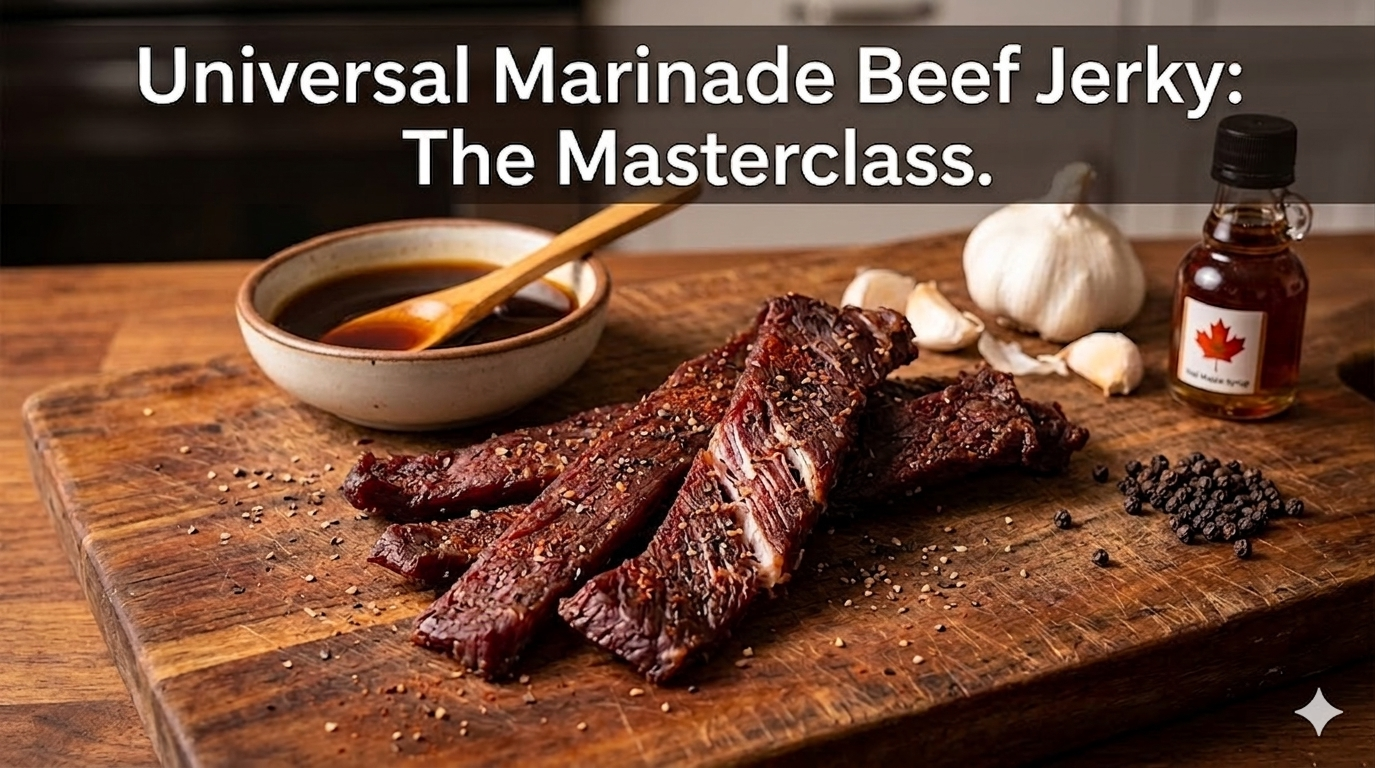
The Texture Test :
- How do you know it's done? Usually, it takes between 4 to 6 hours.Take a piece out and let it cool for a minute. Bend it gently. It should bend and start to fray/crack white fibers in the middle, but it should not snap in half. If it snaps, it's overcooked. If it feels soft and squishy, it needs more time.
Once finished, let your jerky cool completely before sealing it. I recommend using a vacuum sealer for long-term storage or simple mason jars for snacks you'll eat this week.Making your own jerky is the ultimate culinary 'hack.' It’s a skill that rewards patience with a delicious, healthy result that's far superior to anything you can buy off a shelf.